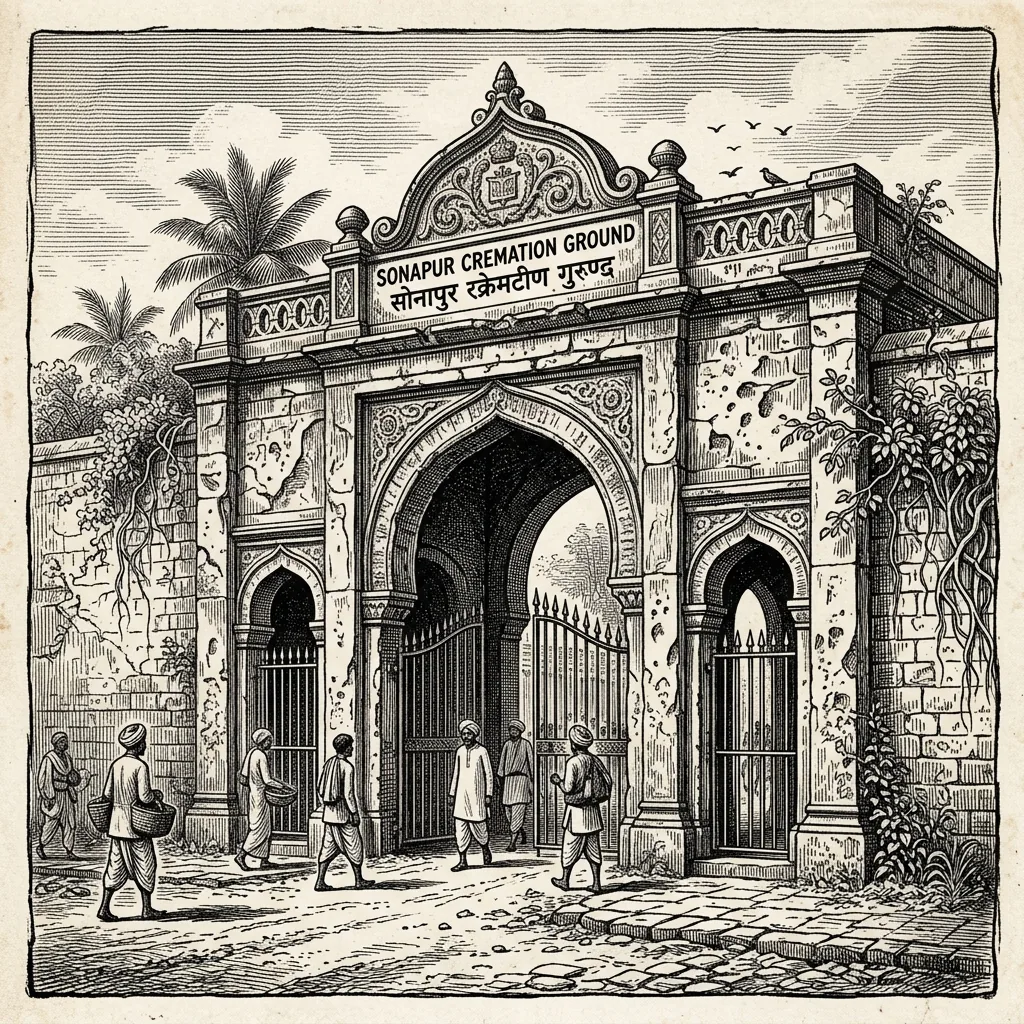
SONAPUR CREMATION GROUND GATE
In the mid-19th century, Mumbai was growing rapidly, and European officials increasingly viewed traditional Hindu cremation grounds as a health hazard. The Sonapur cremation ground, in the Girgaum/Marine Lines area, became a target for closure.
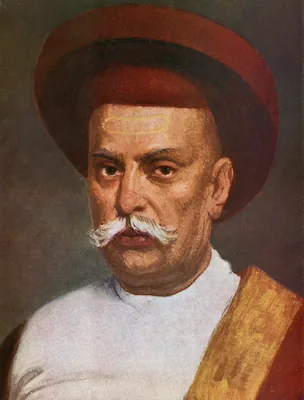
A Walled Sanctuary (1847): Shielding cremation ceremonies from passing Europeans and addressing complaints, Nana Shankarshet personally led a fundraising campaign that collected Rs 25,000 to build a massive stone wall around the site.
But the pressure did not stop.
In 1854, Dr. Leith published a report condemning Sonapur's sanitary conditions. The following year, Senior Police Magistrate A.K. Carfield and Legislative Council member Tristram drafted a bill in 1855 that would permanently close the cremation ground and force families to transport corpses to distant Sewri or Worli by train.
For Nana, this was no longer simply a question of sanitation. It was an attempt to interfere with a deeply held religious practice. He opposed the proposal in the Legislative Council, arguing that Sonapur had existed long before Mumbai's expansion and that the Medical Board had already cleared it of health hazards.
When debate in the Council stalled, Nana took the argument outside it.
He mobilized the local Koli community and led a peaceful procession of 1,500 to 2,000 people from Girgaum to Governor Sir Bartle Frere's bungalow in Parel.
The crowd was impossible to ignore. Governor Sir Bartle Frere summoned Nana, who explained what the proposed closure would mean to Hindu families. The Governor backed down, Tristram withdrew the bill, and Sonapur was saved.
Nana had begun with a wall. When that was not enough, he brought Bombay itself to the Governor's door.